
-
Trust Weighted
Very Good
-
66Trust Points
Wick's Review
Summary - Very Good 3.5
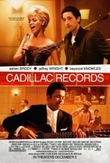
Cadillac Records features truly great music, sexy antics and charismatic portrayals of legendary performers, yet it somehow leaves you blue. Unlike listening to the blues, watching its performers indulge in the proto rockstar life is vicariously wild yet unsatisfying to the soul. I suppose that after more than half a century of such prima donna shenanigans, bad habits just aren’t as exciting as they once seemed.
Still the movie is easily recommended for rock, blues and soul fans. Its glib liberties (see Reality below) will nag if you know your stuff, but in the big scheme of things, better to be remembered in such sumptuous fashion than to fade away.
Is this the great African-American pop music movie? Hell no. But as British bluesman Mick Jagger might put it: You can’t always get what you want, but sometimes you get what you need.
Acting - Great 4.0
Muddy Waters, Chuck Berry, Etta James, not to mention Howlin Wolf, Little Walter and wang dang doodle Willie Dixon are portrayed. Talk about a formidable cast of characters. So hats off to Jeffrey Wright, Mos Def, Beyoncé and their confreres, especially a subdued Cedric the Entertainer as Led Zeppelin muse Willie Dixon. Hell, the actors even sing the songs, respectably if not outstandingly, other than Beyoncé of course. That girl’s got peerless pipes, and looks mighty fine in Etta’s bootylicious tight dresses. That girl goes.
Notably amongst the others, Jeffrey Wright looks like Muddy – neither especially handsome – and nails his solemn charisma. Mos Def ably inhabits Chuck Berry’s quicksilver persona just like ringing a bell. British born Eamonn Walker suitably overwhelms as Howlin Wolf, and Columbus Short is convincingly bipolar as mouth harp legend Little Walter.
Adrien Brody memorably leads the cast of non-musicians, with charming backup from the lovely Gabrielle Union and Emmanuelle Chriqui (E’s girlfriend Sloan on Entourage), not to mention Eric Bogosian as Alan Freed, the DJ who coined the term “Rock and Roll.” I’m also pretty sure that an uncredited Vincent D’Onofrio plays another DJ who appears on screen several times.
Male Stars - Great 4.0
Female Stars - Great 4.0
Female Costars - Great 4.0
Male Costars - Great 4.0
Film - Very Good 3.5
The movie traffics in seminal moments. Music history, pop history, racial history, sexual history, each begins anew in the story of 1950s Chess Records, and its feels-oh-so-good music. For instance, the movie purports to show Muddy Waters plugging in for the first time, going electric. The result being that crazed females start offering him their panties in groups of two, three and four, whereas he was only attracting groupies one-by-one as an acoustic blues guitarist. Talk about male power fantasies. James Bond ain’t never had it as good as Muddy and the thousands of electric bluesmen who followed in his sustain.
Direction - OK 2.5
The writer-director (Darnell Martin) and three of the four producers (including executive producer Beyoncé Knowles) are women. You go girls!Dialogue - Good 3.0
Music - Really Great 4.5
Electric blues changed black America, then white America, then global America. Along with Hollywood, Coke and Cadillacs, its what the world long thought of when they lusted after American pop culture. A suitably great selection of these kick-ass songs are given their due in the movie: Muddy's *I'm a Man* and *I'm a Hoochie Coochie Man* (notice a macho trend?), Chuck Berry's *No Particular Place to Go*, *Nadine* and *Maybellene* (notice a rhyming trend?), Little Walter's *My Babe*, followed by Elvis' salacious live rendition, Howlin' Wolf's *Smokestack Lightning*, and Etta's showstopping *All I Could Do Was Cry*. Wow. No wonder the Rolling Stones came calling. They had to given that they'd named themselves after "Rollin' Stone":http://en.wikipedia.org/wiki/Rollin%27_Stone, Muddy's first Chess single. Check out the Stones jamming with their musical godfather in the WikChip above. Stay with it now. It starts kind of slow but picks up a good rocking thang by the end.Visuals - Really Great 4.5
Edge - Risqué 2.2
Sex, hard drugs and proto-rock-n-roll, it all be here. Zeppelin later, Elvis and the Stones earlier, the rock star trail was broken by the stars of Chess Records in the 1950s. It’s like these guys discovered fire, only here the black magic they stumbled upon threw off “money for nothing and chicks for free,” as Dire Straits would later put it.
Sex Titillating 2.5
Violence Fierce 2.0
Rudeness Salty 2.1
Reality - Glib 1.4
It’s somehow appropriate – in a rock-n-roll truthiness sort of way – that the movie redacts Phil Chess, the real life brother who originally made Chess Records a family. Remember, “based on a true story” means “not true.” As I once said, its Hollywoodspeak for “bring on the dancing girls,” or the groupies in the case of Cadillac Records.
What else isn’t true here? No doubt many details and players are munged together, expunged entirely, or changed to fit the needs of the screenplay. Still, the movie effectively conveys the smokestack lightning that shot up when southern bluesmen went electric and were carried over to white radio stations by Jewish promoters and DJs. The world’s been a little more hoochie coochie ever since.